Activated carbon is widely used in air filtration systems for VOC removal, odour control, and emission abatement. Its porous structure adsorbs gaseous contaminants effectively when contact time and carbon bed depth are properly matched to the pollutant concentration. In HVAC systems and process exhaust treatment, carbon beds reduce odors and protect downstream equipment.
Selection depends on the family of contaminants—coconut-shell carbons are effective for low molecular weight VOCs, while coal-based carbons may better capture larger organics. Humidity, temperature, and the presence of acidic gases influence capacity; pre-treatment or impregnated carbons are used for specific gases like H2S or ammonia. Laxmi International supplies standard and impregnated grades for tailored air treatment needs.
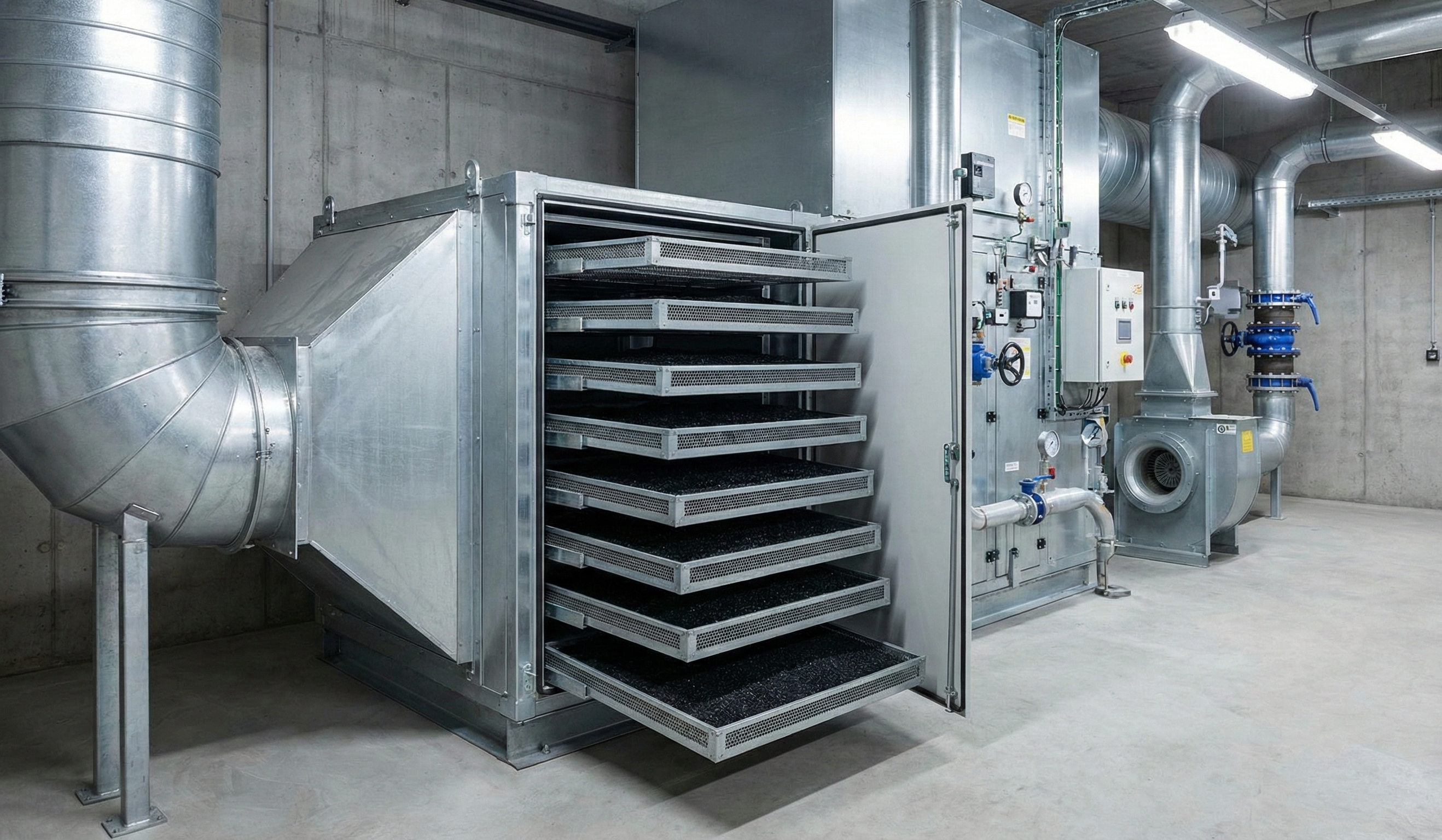
For process exhausts, lifecycle cost analysis should include replacement frequency, pressure drop, and disposal. Regeneration may be possible for certain installations, but safe handling of desorbed contaminants is essential. We help clients design carbon beds and select suitable grades to balance initial expense with operational performance.
Reach out to Laxmi International for specification sheets, pilot testing and supply options for air filtration media tailored to your emissions control program.